Toggle Nav


Toll Free No. : 1660-01-12787


Gaming is one of the most popular hobbies nowadays, and you can enhance your experience of gaming by choosing the right graphics card. The selection of a good graphics card is very crucial in order to make sure that you get the best experience. When playing games in high settings or even when getting immersed in modern AAA games, it becomes essential. High-resolution gaming requires more graphics processing capability as well as sufficient VRAM and memory bandwidth. There is a huge variety of graphics cards available in the market. Hence, choosing the right one may become difficult. But with a little knowledge, you can pick the best value graphics cards for 4K gaming in 2026. .
This blog gives you information about the Best Value Graphics Cards for 4K Gaming in 2026. We have given you some extra information as well, like how to select a good graphics card. Keeping all this in mind, let's begin!
Selecting a graphics card to play 4K games is more complex than just ensuring that the card supports the required resolution. Such features as GPU performance, VRAM, memory bandwidth, and compatibility with recent technologies can impact the gaming experience negatively or positively.
GPU performance is the major requirement for any 4K gaming. With the need for rendering a greater number of pixels than in the case of 1080p or 1440p resolutions, the graphics card must have better performance to ensure smoother gameplay. With higher GPU performance, gamers will be able to use the maximum possible graphics settings while playing new and resource-demanding games.
VRAM stores the graphics resources of the games. High resolution usually requires more VRAM because of the increased amount of textures. For that reason, gamers will need to have enough VRAM to ensure smooth and stable performance of modern titles.
With insufficient VRAM, gamers can face performance drops or need to decrease some graphics options. Therefore, VRAM capacity needs to be taken into account along with the general GPU performance.
Memory bandwidth defines the speed of data transfer between the GPU and VRAM. Larger bandwidth is needed to transfer the increased amount of data related to the graphical content, which is important in the case of high resolution.
The type of memory and interface bus width determine the total memory bandwidth of the graphics card. However, it should be taken into account together with the GPU architecture and performance.
Ray tracing results in a more realistic representation of lighting, reflections, and shadows but may require extra power from the GPU. There are techniques that help to enhance performance by rendering games in reduced internal resolution and upscaling them, which means that you will get higher frame rates with decent picture quality.
All of these alternatives could be very useful for playing games in 4K. When you have a video card that supports ray tracing and upscaling, you can play around with your settings better.
Graphics card output through HDMI and DisplayPort allows it to work with 4K displays and televisions. Different versions of these interfaces may also define certain characteristics of the display, such as refresh rate. However, having a 4K display capability in a graphics card doesn't mean that it is capable of running modern games in 4K resolution fluently. The performance of games depends mainly on GPU capabilities.
When choosing a graphics card for gaming, it is important to consider both the performance and the type of game alongside the resolution at which you plan to play. ASUS offers a range of graphics cards that can support high-resolution gaming, including demanding 4K gaming, upscaled 4K gaming, and high-quality 1440p gaming. Some of the ASUS graphics cards listed in this guide include:
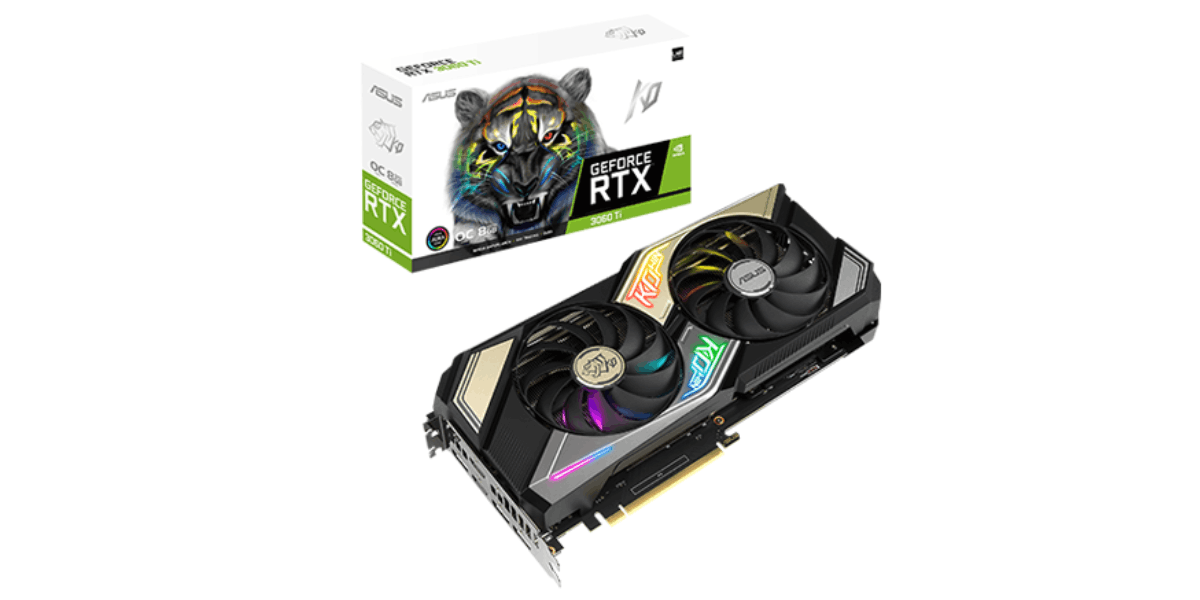
ASUS KO RTX 3060 Ti 8GB is better suited for 1440p gaming, although it can also handle upscaled 4K gaming with appropriate settings. With 8GB of GDDR6 VRAM, a 256-bit memory interface, and 4,864 CUDA cores, it can deliver solid performance at 1440p and support 4K gaming with reduced settings and upscaling technologies such as DLSS.
Key Specs:
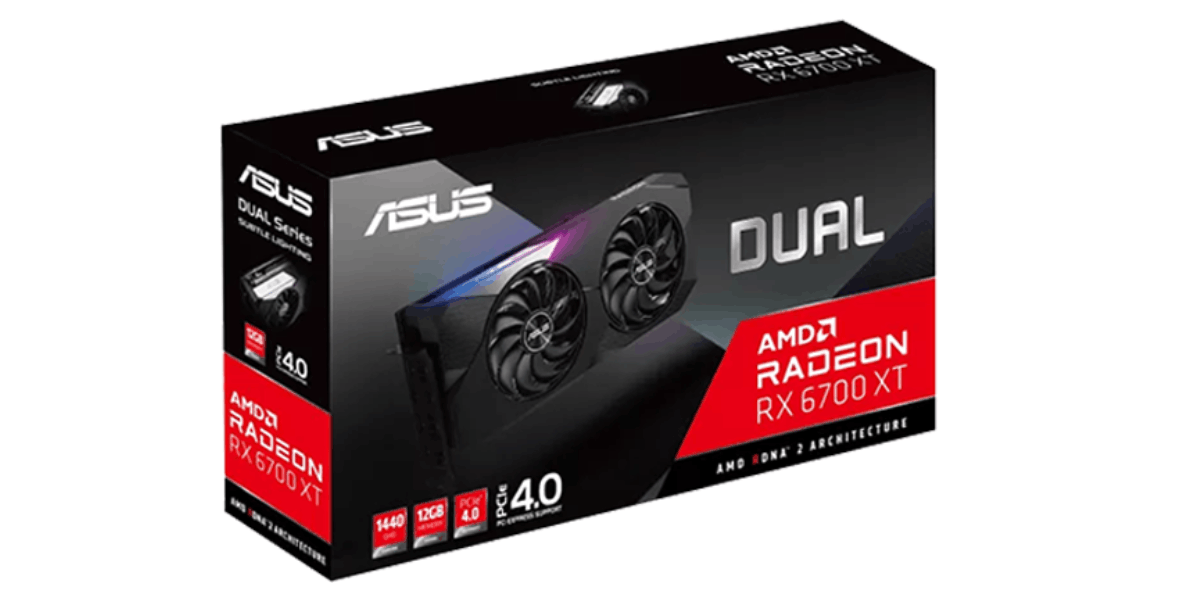
ASUS Dual Radeon RX 6700 XT 12GB GDDR6 offers strong performance for high-quality 1440p gaming and can also handle 4K gaming with appropriate settings. Its 12GB of VRAM provides a better memory capacity for high-resolution gaming than the 8GB cards listed in this guide, although overall 4K performance also depends heavily on GPU power.
Key Specs:
ROG Strix LC Radeon RX 6900 XT 16GB is a high-performance graphics card that is well suited for demanding 4K gaming. It comes with 16GB of GDDR6 memory, 5,120 stream processors, and a 256-bit memory interface, giving it significantly stronger overall performance for demanding 4K gaming than the other cards listed in this guide.
Key Specs:
ASUS ROG Strix RTX 3060 Ti V2 OC 8GB is an overclocked graphics card with an architecture based on the NVIDIA Ampere family. The model includes 8GB of GDDR6 memory, 4,864 CUDA cores, RT cores of the second generation, and Tensor cores of the third generation that help gamers to enjoy ray tracing and DLSS games. This card uses a 256-bit memory bus and supports high-resolution gaming through its HDMI 2.1 and DisplayPort 1.4a outputs. However, like the ASUS KO RTX 3060 Ti listed above, it is better suited for 1440p gaming and upscaled 4K than demanding native 4K gaming.
Compared with the ASUS KO RTX 3060 Ti, this ROG Strix model offers a higher factory overclock and a more advanced cooling design, making it a suitable option for users who prefer improved cooling and higher clock speeds.
Key Specs:
ASUS ROG Strix RTX 3070 V2 OC 8GB is a gaming graphics card that can deliver outstanding performance in high-end graphics games. This particular model features NVIDIA Ampere architecture with RT and Tensor cores, along with 8GB of GDDR6 memory, making it capable of handling demanding games, advanced lighting effects, and DLSS-supported titles. However, its 8GB VRAM capacity may limit its ability to run some modern games at native 4K with the highest settings. Moreover, the ROG Strix series has been optimized for cooling and can be a good choice for gamers requiring better performance over RTX 3060 Ti.
Key Specs:
There are various ways through which you can choose the best graphics card for 4K gaming in 2026 depending on your needs, budget, and features that are to be incorporated into the graphics card. Among the graphics cards listed in this guide, the ROG Strix LC Radeon RX 6900 XT 16GB is the strongest option for demanding 4K gaming due to its high GPU performance and 16GB of VRAM. The ASUS ROG Strix RTX 3070 V2 OC 8GB is an alternative for gamers who prefer NVIDIA features such as ray tracing and DLSS, although its 8GB VRAM capacity makes it better suited for high-resolution 1440p or upscaled 4K gaming than demanding native 4K gaming. For gamers looking for a more affordable option, the ASUS KO RTX 3060 Ti 8GB is better suited for 1440p gaming and can also support upscaled 4K gaming with appropriate settings. Furthermore, the ASUS Dual Radeon RX 6700 XT 12GB offers 12GB of VRAM and strong high-resolution gaming performance at a lower price, although its overall 4K performance is lower than that of the RX 6900 XT and GPU performance should be considered alongside VRAM capacity.
In this blog, we provided you with information about some of the Best Value Graphics Cards for 4K Gaming in 2026. We hope that you found this blog useful. If you are interested in learning more about different aspects of laptops and other computer accessories, do have a look at some of our other blogs. In case you want to buy the best graphics card for 4K gaming in 2026, the only place where you need to go is Nagmani – the authorized distributor of ASUS and Lenovo laptops in Nepal.
The best card of those listed in this guide for heavy-duty 4K gaming would be the ROG Strix LC Radeon RX 6900 XT 16GB, thanks to its 16GB of GDDR6 VRAM and 5,120 stream processors. On the other hand, in accordance with your budget, needs, and personal preferences, there might be a graphics card which suits you better than another one.
For demanding modern games at native 4K resolution, 12GB of VRAM or more is generally recommended because it provides a better margin for higher-resolution textures and demanding graphics settings. Graphics cards with 8GB of VRAM can still support 4K gaming, particularly with reduced settings or upscaling technologies, but may face limitations in some demanding titles.
The RTX 3060 Ti can support 4K gaming, but it is generally better suited for 1440p or upscaled 4K gaming. For demanding modern games, reduced settings and upscaling techniques such as DLSS may be necessary to achieve smoother performance at 4K.